Data as of Sep 14, 2026 · Based on 331 AI responses from ChatGPT Search and Google AI Mode · See how Parse measures this
The best network for your AI dApp depends on the specific service you need. 


Brands AI recommends here
Named in 69% of answers
Named in 62% of answers
Functions as a decentralized cloud marketplace. It is a practical alternative when you need flexible, cost-effective GPU infrastructure specifically for training and deployment.
Named in 51% of answers
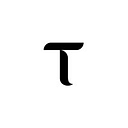
This is the primary recommendation for decentralized AI intelligence. It supports a network where participants earn tokens for training and operating machine learning models.
Named in 47% of answers
Source | Citation share |
|---|---|
 10 Best AI Crypto Coins (September 2026) | Koinlyhttps://koinly.io/blog/ai-crypto-coins/ | 3.7% |
 Top 7 AI Crypto Coins for April 2026 | Tangem Bloghttps://tangem.com/en/blog/post/best-ai-crypto-coins/ | 3.1% |
 Top 5 AI Crypto Tokens in 2025 – ChainUp: Leading Provider of Digital Asset Exchange & Custody Solutionshttps://www.chainup.com/blog/top-5-ai-crypto-tokens/ | 2.5% |
 Top AI Crypto Coins by Market Cap in August 2026 - CoinDCXhttps://coindcx.com/blog/crypto-highlights/top-ai-crypto-tokens/ | 2.0% |
 What Is Decentralised Compute? Plus the Most Popular Projectshttps://crypto.com/us/university/what-is-decentralised-compute-plus-the-most-popular-projects | 1.9% |
10 AI Crypto Coins with Real Utility in 2025: From Agentic Systems to Business Adoptionhttps://mwxtoken.ai/articles/10-ai-crypto-coins-with-real-utility-in-2025-from-agentic-systems-to-business-adoption | 1.7% |
Best AI Crypto Coins to Watch in 2025https://casinofinder.co/best-ai-crypto/ | 1.3% |
 Which Top 10 AI Coins Will Boom in 2026?https://coinswitch.co/switch/crypto/top-10-ai-coins-will-boom/ | 1.3% |
 Bittensor - Wikipediahttps://en.wikipedia.org/wiki/Bittensor | 1.3% |
 DePIN x AI - An Overview of Four Decentralized Compute Network | TokenInsighthttps://tokeninsight.com/en/research/analysts-pick/depin-x-ai-an-overview-of-four-decentralized-compute-network | 1.1% |
When building an AI decentralized application (dApp), the "best" token depends entirely on **what layer of the AI stack** you need: `raw GPU infrastructure for heavy model training/inference, a modular coordination network, or an incentivized machine-learning marketplace`. The top decentralized computation and AI…
When building an AI decentralized application (dApp), the "best" token depends entirely on what layer of the AI stack you need: raw GPU infrastructure for heavy model training/inference, a modular coordination network, or an incentivized machine-learning marketplace.
The top decentralized computation and AI networks are categorized below by their primary strengths:
To help narrow down the exact token or infrastructure for your project, tell me:
If by “powers a decentralized computation network for running AI models,” you mean **the token most directly associated with decentralized AI/model production**, my top pick is **TAO (Bittensor)**. ### 🥇 TAO — Bittensor Bittensor TAO
If by “powers a decentralized computation network for running AI models,” you mean the token most directly associated with decentralized AI/model production, my top pick is TAO (Bittensor).
Bittensor TAO
Bittensor is specifically designed around decentralized machine intelligence: independent subnets can provide model inference, training, compute, predictions, and other AI services. Miners supply the work, validators evaluate it, and TAO is the network's core incentive/staking token.
For an AI dApp, that makes TAO particularly interesting because you can potentially build around specialized Bittensor subnets rather than simply renting generic GPUs.
There are currently subnets specifically targeting things like decentralized GPU rental, confidential AI compute, LLM inference, and verifiable inference.
If your dApp's primary requirement is “give my application decentralized GPUs and run my model/container”, I'd look closely at Akash (AKT) instead.
Akash Network AKT
Akash is essentially a decentralized cloud marketplace: providers offer CPU/GPU resources, applications submit workloads, and providers compete on price. Its documentation explicitly positions it for AI/ML workloads and GPU compute.
So I'd frame the choice like this:
| Your goal | Better fit |
|---|---|
| Decentralized AI/model ecosystem | TAO / Bittensor |
| Decentralized GPU/cloud infrastructure | AKT / Akash |
| AI inference marketplace | Bittensor |
| Deploy your own Dockerized AI workload | Akash |
| Create an AI subnet with incentive mechanisms | Bittensor |
My pick for an AI dApp: TAO/Bittensor if the decentralized intelligence itself is part of your product; AKT/Akash if you mainly need decentralized compute infrastructure. They're complementary rather than direct substitutes.
If you tell me what your dApp actually does (e.g. LLM inference, image generation, agent workloads, model training, or AI agents), I can recommend the best network/token and architecture for it.
When building an AI decentralized application (dApp), choosing the "best" token depends entirely on what layer of the decentralized AI stack your application relies on. The decentralized compute ecosystem is generally split into **raw GPU/infrastructure marketplaces** (where you rent hardware to run models) and…
When building an AI decentralized application (dApp), choosing the "best" token depends entirely on what layer of the decentralized AI stack your application relies on. The decentralized compute ecosystem is generally split into raw GPU/infrastructure marketplaces (where you rent hardware to run models) and intelligence/model networks (where the AI models themselves run and consensus is formed).
If your dApp needs underlying hardware—such as GPU clusters to host, train, or run inference on open-source weights (like Llama or Stable Diffusion) without relying on AWS or GCP—you look at Decentralized Physical Infrastructure Networks (DePINs):
If your dApp doesn't want to manage raw server infrastructure at all, but rather wants to tap into a decentralized network of competing AI models, miners, and incentivized intelligence:
To help narrow down the exact fit, could you tell me:
If you mean **“what token powers a decentralized network where my AI dApp can run or access AI models?”**, the answer depends on what layer of the AI stack you need. There isn’t one universal winner. The main contenders are: Token | Network | Best fit for an AI dApp | Think of it as --- | --- | --- | ---
If you mean “what token powers a decentralized network where my AI dApp can run or access AI models?”, the answer depends on what layer of the AI stack you need. There isn’t one universal winner. The main contenders are:
| Token | Network | Best fit for an AI dApp | Think of it as |
|---|---|---|---|
| TAO | Bittensor | Decentralized AI models, inference markets, model competition | “A marketplace for intelligence” |
| AKT | Akash Network | Renting decentralized GPUs and deploying model servers | “Decentralized AWS for AI” |
| RENDER | Render Network | Distributed GPU workloads, rendering, some AI compute | “A GPU supply network” |
| IO | io.net | Aggregated GPU clusters for ML workloads | “A decentralized GPU cloud” |
ToDaMoon CrunchUpdates## My recommendation by architecture
Example:
→ Look hardest at TAO (Bittensor).
Bittensor is designed around incentivizing AI services rather than just leasing hardware. Its subnet model lets different networks specialize in tasks such as inference, training, and other AI services.
Example:
→ AKT (Akash) is probably the cleaner fit.
Akash behaves more like decentralized cloud infrastructure: you deploy workloads and use a marketplace of providers offering compute resources.
→ Consider RENDER or IO.
These are closer to the “compute supply” layer: getting access to distributed GPU capacity rather than accessing an AI-native model marketplace.
One architectural point: many serious AI dApps will likely use more than one layer:
If you tell me what your dApp does (LLM chatbot, AI agents, image/video generation, training, DePIN, etc.) and what chain you're building on (Ethereum, Solana, Base, Cosmos, etc.), I can suggest the best stack rather than just the token.
If you mean **“what token powers a decentralized network where my AI dApp can run models”**, the answer depends on what layer you need. There isn’t one universal winner because decentralized AI has split into a few categories.…
If you mean “what token powers a decentralized network where my AI dApp can run models”, the answer depends on what layer you need. There isn’t one universal winner because decentralized AI has split into a few categories.
My shortlist:
| Token | Network | Best fit for an AI dApp |
|---|---|---|
| TAO | Bittensor | Decentralized AI models, inference markets, model providers, AI-native services |
| AKT | Akash Network | Renting decentralized GPU/cloud compute to run your own models |
| RENDER | Render Network | Distributed GPU workloads, especially graphics + AI compute |
| AI | Gensyn | Verifiable decentralized ML computation/training |
Bittensor.ai Gensyn Docs### My pick by architecture
Building an AI agent, model marketplace, or decentralized inference app → TAO
Bittensor is designed around rewarding useful machine intelligence. Its subnets let participants provide AI services, and validators score outputs.
Building a normal AI dApp that needs GPUs to run an LLM → AKT
Think “decentralized AWS”: deploy containers, access GPU resources, run inference backends.
Training large models or needing verifiable compute → Gensyn
Gensyn focuses on executing and verifying machine-learning workloads across distributed hardware.
Heavy GPU workloads → RENDER
Strong if your app needs large amounts of distributed GPU capacity, especially for parallel workloads.
For a new AI dApp, I would usually evaluate:
A useful question is: Are you trying to (a) run your own model cheaply, (b) access other people's models, or (c) create a marketplace where AI providers compete? The answer changes the best token.
There is no single "absolute best" token because the right choice depends entirely on whether your dApp needs an **ecosystem of pre-trained models** , raw **hardware power (GPUs)** , or **on-chain execution** . The top decentralized compute networks leading the space in 2026 are specialized across distinct layers of…
There is no single "absolute best" token because the right choice depends entirely on whether your dApp needs an ecosystem of pre-trained models , raw hardware power (GPUs) , or on-chain execution . The top decentralized compute networks leading the space in 2026 are specialized across distinct layers of the AI tech stack:
🔎 Network Comparison for dApp Developers
| Token / Network | Core Developer Focus | Standout Technical Strength |
|---|---|---|
| TAO (Bittensor) | API-driven access to a "global brain" | Tap into 128+ specialized subnets competing for optimal inference accuracy. |
| RENDER (Render Network) | Raw GPU physical infrastructure | Enterprise-grade, distributed GPU nodes optimized for high-demand visual & LLM inference. |
| AKT (Akash Network) | General cloud compute & hosting | Highly flexible, open-source marketplace providing cheap CPU/GPU containers. |
| ICP (Internet Computer) | Complete on-chain execution | Eliminates traditional Web2 servers; the model runs directly inside blockchain canisters. |
💡 Deep Dive: Which Should You Build With?
If your dApp needs to query high-performing models (e.g., text, image generation, data analysis) without managing the underlying server configurations, Bittensor is the strongest choice. It aggregates machine intelligence into specialized subnets.
If you have a proprietary AI model or want to deploy an open-source model (like Llama 3) and just need affordable, decentralized server power, look at these DePIN (Decentralized Physical Infrastructure) networks.
Most "AI dApps" use blockchain for payments but run the actual AI on traditional, centralized web servers. If your project demands absolute censorship resistance, privacy, and full on-chain verifiability, ICP is engineered for this.
➡️ Next Steps for Your Project
To help narrow down the best economic and technical framework for your dApp, consider:
There is no single "absolute best" token, as the right choice depends entirely on your dApp's technical architecture. Instead, four prominent projects dominate the decentralized computation space, each excelling at a different layer of the artificial intelligence (AI) infrastructure stack. 🔎 The Top Decentralized…
There is no single "absolute best" token, as the right choice depends entirely on your dApp's technical architecture. Instead, four prominent projects dominate the decentralized computation space, each excelling at a different layer of the artificial intelligence (AI) infrastructure stack.
🔎 The Top Decentralized Compute Tokens for AI
📊 Direct Architectural Comparison
| Network & Token | Architectural Layer | Primary Technical Use Case | Best For Your dApp If... |
|---|---|---|---|
| Render Network | |||
RENDER | Hardware / Infrastructure | High-performance, on-demand GPU rendering & generative AI inference. | You need heavy, commercial-grade GPU clusters (e.g., H100s) to run heavy text-to-video or image generation models. |
| Bittensor | |||
TAO | Intelligence / Output | P2P machine learning network that acts as a decentralized global brain. | You want to pull pre-validated, high-quality answers from an ecosystem of competing AI models without managing servers. |
| Akash Network | |||
AKT | Cloud / Compute | "Airbnb of Data Centers" providing containerized cloud resources. | You want cheap, censorship-resistant cloud infrastructure to deploy your own custom Dockerized AI containers. |
| Artificial Superintelligence Alliance | |||
FET | Agent Coordination | Multi-agent autonomous frameworks and multi-chain machine economies. | Your dApp relies on interconnected, autonomous AI bots that negotiate, transact, and complete complex multi-step tasks. |
💡 Deep Dive: Choosing Your Stack
✅ For Raw GPU Access & AI Inference: Render (RENDER) vs. Akash (AKT)
If your dApp just needs pure raw compute power to run models, look here.
✅ For Model Logic & Intelligence Ecosystems: Bittensor (TAO)
If you want your dApp to query an evolving, decentralized intelligence pool rather than managing individual models, Bittensor is the industry standard.
✅ For Autonomous Workflows: Artificial Superintelligence Alliance (FET)
If your dApp focuses on decentralized AI automation, use the Artificial Superintelligence Alliance token.
To help narrow down the technical stack for your project, tell me:
If by “token that powers a decentralized computation network for running AI models,” you mean the **infrastructure token** rather than an AI-agent/app token, my top pick would be **AKT (Akash Network)**. - **AKT — Akash:** Best fit for an AI dApp that needs to **rent decentralized GPU/CPU compute** for model…
If by “token that powers a decentralized computation network for running AI models,” you mean the infrastructure token rather than an AI-agent/app token, my top pick would be AKT (Akash Network).
For “my dApp needs decentralized GPUs to run AI models” → AKT/Akash.
For “my dApp should tap into a decentralized marketplace of AI models/services/intelligence” → TAO/Bittensor.
One important tokenomics detail: Akash has evolved so that AKT is primarily the staking/governance/native value token, while ACT is the USD-pegged compute credit used to fund deployments and pay providers. Akash Network Akash Network So if you're designing your dApp's economics, don't assume users need to directly pay every inference request in volatile AKT.
If you tell me whether your dApp needs inference, model training/fine-tuning, or decentralized model hosting, I can compare AKT vs TAO vs RENDER specifically for your architecture and token economics.
If by “token that powers a decentralized computation network for running AI models” you mean **the strongest fit for an AI dApp that needs decentralized GPU/AI compute**, I’d shortlist **AKT (Akash Network)** first. - **AKT — Akash Network:** decentralized cloud/GPU marketplace. You can deploy AI workloads on…
If by “token that powers a decentralized computation network for running AI models” you mean the strongest fit for an AI dApp that needs decentralized GPU/AI compute, I’d shortlist AKT (Akash Network) first.
For an AI dApp needing actual decentralized compute → AKT.
For an AI dApp built around decentralized model/inference markets → TAO.
One important distinction: Akash's current architecture uses ACT, a USD-pegged compute credit, for deployment payments, while AKT is used for staking, governance, and network value exchange. Akash Network Akash Network So if you're designing tokenomics, don't assume AKT itself is the per-inference payment token.
If you tell me whether your dApp needs GPU inference, model training, agent execution, or decentralized model providers, I can recommend the best 3 networks/tokens and compare TAO vs AKT vs RNDR/RENDER for your architecture.
The best token depends on your specific architectural need, but **TAO (Bittensor)** is widely considered the top network token for decentralized machine learning , while **RENDER (Render Network)** and **AKT (Akash Network)** lead in raw decentralized GPU compute. [1][2][3] Choosing the right token for your AI dApp…
The best token depends on your specific architectural need, but TAO (Bittensor) is widely considered the top network token for decentralized machine learning , while RENDER (Render Network) and AKT (Akash Network) lead in raw decentralized GPU compute. [1][2][3]
Choosing the right token for your AI dApp requires matching your core technical bottleneck (model inference, training, or raw GPU leasing) to the right network layer.
Top Network Tokens for AI dApps
| Project & Ticker | Core Value Proposition | Best Used For |
|---|---|---|
| Bittensor (TAO) | Decentralized machine learning subnet economy | Querying distributed AI models and intelligence incentives |
| Render (RENDER) | Distributed GPU rendering and compute | Heavy AI model training and parallelized GPU tasks |
| Akash Network (AKT) | Decentralized open-source cloud marketplace | Hosting open-source AI models (LLMs) and inference backends |
| FET (Artificial Superintelligence Alliance) | Multi-agent autonomous economic systems | Deploying interoperable, communicating AI agents |
Detailed Breakdown by Use Case
To help narrow down the ideal token and network for your project, tell me:
No sources cited