Data as of Sep 9, 2026 · Based on 318 AI responses from ChatGPT Search and Google AI Mode · See how Parse measures this
The best entry-level offset smoker depends on your budget and preference for handling. For those prioritizing heat retention and less frequent fire management, the Old Country Brazos is the top choice due to its thicker 1/4-inch steel construction. If you are looking for a more accessible starting point, 
Brands AI recommends here
Named in 73% of answers
Named in 68% of answers
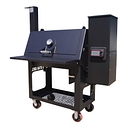
Ideal for those wanting professional-grade heat retention without constant adjustments. Its heavy-duty 1/4-inch steel construction makes it a superior, though slightly more expensive, choice for serious beginners.
Named in 55% of answers
Named in 16% of answers
Source | Citation share |
|---|---|
 The 5 Best Offset Smokers [2026] - Expert Reviewshttps://www.smokedbbqsource.com/best-offset-smokers/ | 5.9% |
 Best offset smoker that won’t break the bank?? : r/smokinghttps://www.reddit.com/r/smoking/comments/1al9bbs/best_offset_smoker_that_wont_break_the_bank/ | 4.0% |
 The Best Offset Smoker for 2026 - The Barbecue Labhttps://thebarbecuelab.com/best-offset-smoker/ | 2.7% |
 10 Best Offset Smokers (May 2026) Expert Reviews & Buying Guidehttps://www.rosenberryrooms.com/best-offset-smoker/ | 1.9% |
 Best Offset Smokers Under $1000: 4 Budget Stick Burners Worth Buyinghttps://www.burningbrisket.com/best-offset-smokers-under-1000/ | 1.7% |
 The Best and Affordable Starter Offset Smokershttps://www.youtube.com/shorts/iGHGaMn7EnU | 1.6% |
 What is the best offset smoker for a beginner? - Facebookhttps://www.facebook.com/groups/northtexasbbq/posts/6574262526013750/ | 1.5% |
Choosing an Offset Smoker – Smoke Northhttps://smokenorth.com/blogs/how-to/choosing-an-offset-smoker | 1.4% |
Meat Church Congregation | What’s the best brand offset smoker | Facebookhttps://www.facebook.com/groups/935086413269446/posts/6507654926012539/ | 1.4% |
Offset Smokers - Perfectly Smoked Meats Every Timehttps://bbqhero.com/best-offset-smokers/ | 1.2% |
Moving from a Weber Smokey Mountain (WSM)Go to product viewer dialog for this item. to an offset smoker is a big shift. The WSM Go to product viewer dialog for this item. practically runs itself, whereas a `traditional offset` requires a bit more active fire management. The golden rule of offset smokers is that…
Moving from a Weber Smokey Mountain (WSM)Go to product viewer dialog for this item. to an offset smoker is a big shift. The WSM Go to product viewer dialog for this item. practically runs itself, whereas a traditional offset requires a bit more active fire management.
The golden rule of offset smokers is that steel thickness equals temperature stability . Cheap, thin-gauge offsets ($100–$200 big-box store specials) lose heat instantly, leak smoke from every seam, and will have you chasing temperatures every 15 minutes. To get steady temperatures without constant babysitting, you need heavy-duty construction (at least $300–$500+ range) that retains heat and stabilizes the coal/wood bed.
Top entry-level offset options known for holding a steady temperature include:
To help narrow down the ideal choice, let me know:
No sources cited
If your priority is **“real offset flavor, but I don't want to spend the whole brisket babysitting the pit,”** I’d skip the cheap thin-wall offsets and step up to **1/4-inch steel**. ### My pick: Old Country Brazos - **Old Country BBQ Pits Brazos Offset Smoker** - $1,699.99 (Tractor Supply Company)
If your priority is “real offset flavor, but I don't want to spend the whole brisket babysitting the pit,” I’d skip the cheap thin-wall offsets and step up to 1/4-inch steel.
The Old Country Brazos is the sweet spot I’d recommend coming from a Weber Smokey Mountain. It has 1/4-inch steel, fully welded construction, substantial thermal mass, and a conventional offset layout. Current listings show it around $1,700, although pricing varies considerably by retailer.
Why I like it for your particular upgrade:
One important caveat: no traditional offset is going to be as hands-off as your WSM. Even a great Brazos still wants you to manage a small, clean fire and feed it splits periodically. The difference is that a good heavy pit makes those adjustments predictable instead of turning every gust of wind into a 50°F temperature chase.
I'd look at the Oklahoma Joe's Highland/Longhorn, particularly the reverse-flow versions. They're legitimate entry-level offsets and the reverse-flow design helps even out the cooking chamber, but the thinner construction means you'll work harder to maintain 250°F, especially in cold or windy conditions.
The current Highland is roughly $430 in one retailer listing:
But I wouldn't buy one if your specific goal is minimizing fire-management headaches. You'd be trading some of your WSM's ease of use for the offset experience, without making the pit itself particularly forgiving.
Then I'd start looking at Yoder Loaded Wichita, Horizon 20/16-inch Classic, or Workhorse. You're getting into genuinely heavy-duty pits where construction, airflow and fit/finish become much better.
Workhorse in particular is a substantial jump: its 1975 uses 3/8-inch steel, whereas the Brazos is 1/4-inch.
My ranking for you:
Coming from a WSM, I'd personally spend the extra money on the Brazos rather than buying a $500 offset and immediately wishing you'd bought the heavier pit. The whole point of your upgrade should be getting better fire-driven barbecue without making temperature control dramatically worse.
If you tell me your budget (e.g. $1,000 / $1,500 / $2,000) and whether you want traditional-flow or reverse-flow, I can narrow it down to the 2–3 pits I'd actually buy.
Then I'd start looking at Yoder Loaded Wichita, Horizon 20/16-inch Classic, or Workhorse. You're getting into genuinely heavy-duty pits where construction, airflow and fit/finish become much better.
Workhorse in particular is a substantial jump: its 1975 uses 3/8-inch steel, whereas the Brazos is 1/4-inch.
My ranking for you:
Stepping away from a Weber Smokey Mountain (WSM)Go to product viewer dialog for this item. to an offset smoker is a fun transition, but it comes with a reality check: **true "set-and-forget" does not exist in the sub-$1,000 offset world.** Because offsets rely on a live stick-burn (or charcoal/wood combo) and natural…
Stepping away from a Weber Smokey Mountain (WSM)Go to product viewer dialog for this item. to an offset smoker is a fun transition, but it comes with a reality check: true "set-and-forget" does not exist in the sub-$1,000 offset world.
Because offsets rely on a live stick-burn (or charcoal/wood combo) and natural draft, holding a steady temperature requires managing a fire every 30 to 45 minutes. Thin-gauge, cheap offset smokers (the $150 hardware store specials) leak smoke and heat from every seam, forcing constant adjustments.
To get an entry-level offset that holds a stable temperature without pulling your hair out, you need thick steel (at least 1/4-inch or heavy 10/12-gauge) to retain heat, and a well-designed baffle/collector system.
The top entry-level recommendations that bridge the gap from a WSM without jumping straight into a $3,000 custom rig include:
Since moving from a WSM (which is a vertical bullet smoker) to a horizontal offset is a big shift in workflow, let me know:
I can give you a better breakdown of what kind of fire management to expect!
No sources cited
If your goal is **“I want real offset flavor, but I don't want to babysit the pit every five minutes,”** I'd skip the ultra-cheap offsets and spend a little more on the cooker itself. ## My pick: Old Country Brazos - **Old Country BBQ Pits All-American Brazos Smoker** - $1,549.99 (Academy Sports + Outdoors)
If your goal is “I want real offset flavor, but I don't want to babysit the pit every five minutes,” I'd skip the ultra-cheap offsets and spend a little more on the cooker itself.
For someone moving up from a Weber Smokey Mountain specifically to cook brisket, the Old Country Brazos is where I'd start.
The important distinction is that no traditional offset is truly set-and-forget. You're still going to manage a clean fire and add wood splits periodically. What you're buying with the Brazos is forgiveness: when the weather changes or you open the door, the pit doesn't immediately lose its mind.
The Oklahoma Joe's Highland is the classic entry-level choice. Its reverse-flow configuration helps even out the firebox-side hot spot, and it's a legitimate way to learn stick burning.
But there's an important caveat: it won't give you the temperature stability you're specifically asking for. You'll still be tending the fire frequently, and budget offsets benefit from sealing/gasket work.
So I'd frame the choices like this:
| Budget | I'd buy | Why |
|---|---|---|
| ~$400–500 | Oklahoma Joe's Highland | Cheapest reasonable entry into real offset cooking |
| ~$750–900 | Old Country Pecos / similar | Better construction, less tinkering |
| ~$1,500–1,700 | Old Country Brazos | Sweet spot for serious brisket |
| $2,000+ | Heavy-duty insulated/welded pit | Buy once, cry once |
One other thing: don't buy an offset expecting it to behave like your WSM. The WSM's great strength is temperature stability with very little attention; an offset's great strength is the flavor and character of a clean-burning wood fire.
For your particular upgrade, I'd spend the extra money on the Brazos rather than buying a $400 offset and then putting $300–500 into modifications. That's the point where you're getting a noticeably more substantial pit rather than just a different-shaped version of the WSM experience.
If you tell me your budget ceiling ($500 / $1,000 / $1,500 / $2,000+), I can narrow it down to the 2–3 offsets I'd actually consider for brisket and explain which one I'd buy.
If you're coming from a **Weber Smokey Mountain** and specifically want a *real stick-burning offset* for brisket, I’d avoid the ultra-cheap offsets. They can make great BBQ, but you’ll spend your time fighting leaks and temperature swings. ## My pick: Oklahoma Joe’s Highland Reverse Flow - **Oklahoma Joe's Highland…
If you're coming from a Weber Smokey Mountain and specifically want a real stick-burning offset for brisket, I’d avoid the ultra-cheap offsets. They can make great BBQ, but you’ll spend your time fighting leaks and temperature swings.
The Oklahoma Joe’s Highland Reverse Flow is probably the best entry point for what you're describing. Its reverse-flow baffles help smooth out the firebox-to-chimney temperature gradient, and the heavier construction gives it more thermal stability than the bargain offsets. Recent comparisons consistently put it ahead of similarly priced Char-Griller models for temperature control.
The important caveat: an offset will never behave like your WSM. You're still burning wood splits, so expect to tend the fire roughly every 45–60 minutes.
I'd actually step up to the Oklahoma Joe's Longhorn Reverse Flow:
It's substantially larger and heavier, with 1,060 sq. in. of cooking area. The extra thermal mass is useful for maintaining a stable pit, particularly when you're cooking in Michigan's colder/windier weather.
One thing I'd not do is buy a $150–250 thin-wall offset thinking it'll be equivalent to the WSM. You'll likely end up sealing doors, adding tuning plates/baffles, and constantly adjusting the fire.
For you specifically, I'd lean Longhorn over Highland if your budget allows it. Coming from a WSM, you're presumably not looking to merely try offset cooking—you want that clean-burning wood-fire brisket experience. Spend a little more on the pit and spend less time fighting the cooker.
If you give me your budget ($500 / $1,000 / $1,500), I can narrow it down to the 2–3 offsets I'd actually consider and tell you which one I'd buy.
Moving from a Weber Smokey Mountain (WSM)Go to product viewer dialog for this item. to an offset smoker is a fun leap, but it’s important to know the golden rule of offsets: **no budget offset holds a steady temperature "without constant adjustments" entirely on its own.** Unlike your WSM—which is a vertical…
Moving from a Weber Smokey Mountain (WSM)Go to product viewer dialog for this item. to an offset smoker is a fun leap, but it’s important to know the golden rule of offsets: no budget offset holds a steady temperature "without constant adjustments" entirely on its own.
Unlike your WSM—which is a vertical fuel-efficient chamber that practically runs itself once dialed in—an offset is a living, breathing fire that requires you to feed it small splits of wood every 45 to 60 minutes.
However, what does change between cheap offsets and good entry-level ones is thermal mass and build quality . Thicker steel forgives minor stoking mistakes and buffers against wind and outside temps, meaning you aren't constantly chasing runaway fires or dying coals.
The top entry-level offset recommendations that won't require immediate modifications or leak smoke from every seam include:
Add to listOld Country BBQ Pits Pecos (Available at Tractor Supply Co. ): Widely considered the gold standard for a "true" entry-level stick burner. Unlike lightweight box-store brands, it features all-welded construction (14-gauge body with 11-gauge doors), meaning it arrives ready to roll without gaps or flimsy bolts. It has a great draw and holds heat remarkably well for its price point (~$789). If your budget stretches a bit more, their heavy-duty *Wrangler Go to product viewer dialog for this item. * or *Brazos Go to product viewer dialog for this item. * models step up to true 1/4-inch thick steel.[1]
Add to listOklahoma Joe’s Highland / Laredo Series (Available at Oklahoma Joe's or Ace Hardware ): The quintessential accessible backyard offset (~$300–$430). It uses thinner metal than the Old Country, so you will need to use high-temp RTV silicone sealant around the cooking chamber door and consider adding a tuning plate or convection baffle to even out the heat. But it has a massive user community online, meaning you can find a fix or mod for literally any issue you run into.[1][2]
Char-Griller Grand Champ XD
An absolute dark horse in the budget category. It features heavy-gauge steel construction and heavy-duty cast-iron grates that punch well above their weight class for the price. It retains heat far better than traditional cheap box-store offsets, though like the Oklahoma Joe's, taking a little time to seal the gaskets will make it an absolute heat-trap.
To help narrow down which of these fits your backyard, tell me:
Moving from a Weber Smokey Mountain (WSM)Go to product viewer dialog for this item. to an offset smoker is a massive shift. The WSM Go to product viewer dialog for this item. is an absolute set-it-and-forget-it champion . Traditional thin-gauge offset smokers ($200–$300 big-box store models) are the exact…
Moving from a Weber Smokey Mountain (WSM)Go to product viewer dialog for this item. to an offset smoker is a massive shift. The WSM Go to product viewer dialog for this item. is an absolute set-it-and-forget-it champion . Traditional thin-gauge offset smokers ($200–$300 big-box store models) are the exact opposite—they leak heat and smoke from every seam, forcing you to tend the fire every 15 minutes just to keep a stable temperature.
To avoid constant adjustments and nail a brisket without losing your sanity, thickness (gauge) of the steel is everything . You want at least 1/4-inch (or heavy 10-to-14 gauge) steel that can retain heat and breeze through wind or cold weather.
Top recommendations for a "true" entry-level offset that won't require constant babysitting include:
- **Why it's great:** Widely considered the gold standard for a true "budget-friendly" heavy-duty offset . Unlike thin 18-gauge sheet metal smokers, the Pecos is built from rugged 14-gauge steel with thicker lids . It holds heat remarkably well, drafts cleanly, and doesn't require high-temp RTV silicone gasket mods right out of the gate.
- **Price:** ~$500[](https://www.bbq-brethren.com/threads/best-offset-smoker-under-1000.291044/) [[1]](https://www.bbq-brethren.com/threads/best-offset-smoker-under-1000.291044/)[[2]](https://www.bbq-brethren.com/threads/old-country-pecos-vs-oklahoma-joe-highlander.301754/)

- **Why it's great:** A massive step up from traditional cheap offsets, featuring heavy-gauge steel construction, tight-fitting lids with professional latches, and sliding ash/charcoal management. It has fantastic thermal mass for the price point and an oversized smokestack that creates smooth, effortless airflow across a brisket flat.
- **Price:** ~$600–$700[](https://www.youtube.com/watch?v=oavE8alJ1m8&t=635) [[1]](https://www.youtube.com/watch?v=oavE8alJ1m8&t=635)[[2]](https://www.youtube.com/watch?v=vmalU7eDfB4&t=776)

- **Why it's great:** If you want extra insurance on steady temperatures, the reverse-flow variant of the classic Longhorn uses internal baffles to route heat and smoke underneath a baffle plate across the entire length of the chamber . This evens out hot spots, meaning you don't have to constantly rotate or fiddle with the brisket as much as a traditional flow design.
- **Price:** ~$550–$600[[1]](https://www.youtube.com/watch?v=vmalU7eDfB4&t=776)
A Quick Reality Check Coming from a WSM
Even the best entry-level offset requires burning clean split logs (not just charcoal briquettes like your WSM Go to product viewer dialog for this item.). To keep it steady without constant adjustments:
Are you looking to stay strictly under a specific budget , or do you have a preference for stick-burning wood splits vs. charcoal/wood chunk hybrid cooking?
Since you’re coming from a **Weber Smokey Mountain**, I’d avoid the really cheap offsets. You already know how to run a clean fire and hold temps; the upgrade you’re looking for is a pit that gives you **better smoke flavor and a more “real” brisket experience without fighting leaks, thin steel, and wild swings**. The…
Since you’re coming from a Weber Smokey Mountain, I’d avoid the really cheap offsets. You already know how to run a clean fire and hold temps; the upgrade you’re looking for is a pit that gives you better smoke flavor and a more “real” brisket experience without fighting leaks, thin steel, and wild swings.
The short answer: buy a reverse-flow offset, not the cheapest traditional offset.
Why it’s the sweet spot:
Reality check: it still isn’t a “set it and forget it” cooker. A good offset requires tending a clean-burning fire and adding splits periodically. Smoke & Slow Compared with your WSM, you’ll trade overnight stability for better bark, smoke flavor, and the satisfaction of running a live fire.
This is the model I’d consider if you’re serious about brisket and don’t want to upgrade again soon.
Advantages:
It’s heavier and costs more, but it’s closer to the “buy once, learn the pit” category.
Examples like small Royal Gourmet/VEVOR-style offsets are tempting, but they often have:
They’ll make good food, but they’re often a sideways move from the WSM in terms of frustration.
One question changes my recommendation: what’s your budget ceiling — around $500, $1,000, or are you willing to jump to a lifetime pit? Also, are you mostly cooking one brisket at a time, or do you want room for comps/parties?
If your priority is **“real offset flavor, but I don't want to spend the whole brisket constantly chasing the thermometer,”** I'd skip the really cheap offsets and spend a little more on **mass + good airflow**. ## My pick: Oklahoma Joe’s Longhorn Reverse Flow - **Oklahoma Joe's Longhorn Reverse Flow Offset Smoker** -…
If your priority is “real offset flavor, but I don't want to spend the whole brisket constantly chasing the thermometer,” I'd skip the really cheap offsets and spend a little more on mass + good airflow.
For someone coming from a Weber Smokey Mountain, this is the entry-level offset I'd buy.
The big reason is the reverse-flow design. Baffles force the hot gases down and under the cooking chamber before they travel back across the brisket. That substantially reduces the brutal firebox-end hot spot that makes cheap offsets frustrating. The baffles are removable, so you can eventually run it as a conventional offset if you want.
It also has considerably more thermal mass than the inexpensive box-store pits. The Longhorn's chamber is roughly 2.5 mm steel and it weighs around 250 lb, which helps it ride through wind and small fluctuations in the fire.
The catch: it's still an offset. You're not going to get WSM-like “set it and forget it” behavior. Expect to learn a rhythm of adding properly sized wood splits roughly every 45–60 minutes rather than making constant vent adjustments.
The Oklahoma Joe's Laredo 1100 is the more budget-conscious choice at about $350 currently. It's a legitimate step into stick-burning, with 1,100 sq. in. of cooking area and heavier construction than the ultra-cheap offsets. But I'd still take the Longhorn for brisket if the extra ~$300–450 isn't painful.
I wouldn't buy a $150–250 thin-wall offset thinking it will be an easier transition from your WSM. They can make excellent BBQ, but thin steel reacts quickly to wind and changes in the fire, which means more fire management, exactly what you're trying to get away from.
And I wouldn't buy a standard Oklahoma Joe's Highland just because it's the classic recommendation. It's inexpensive and has an enormous modification ecosystem, but the stock version needs more attention and sealing/modification than I'd want for your particular goal.
One other point: don't expect an offset to be less work than your WSM. It's actually more work—but the work is different. With the WSM you're managing airflow; with the offset you're managing a clean-burning wood fire. The payoff is considerably more control over smoke character and that classic brisket bark.
If your budget is around $500, $1,000, or $1,500, I can also tell you where I'd spend the money at each level—there are a couple of much better “buy once” pits once you get above the Oklahoma Joe tier.
The Oklahoma Joe's Laredo 1100 is the more budget-conscious choice at about $350 currently. It's a legitimate step into stick-burning, with 1,100 sq. in. of cooking area and heavier construction than the ultra-cheap offsets. But I'd still take the Longhorn for brisket if the extra ~$300–450 isn't painful.
I wouldn't buy a $150–250 thin-wall offset thinking it will be an easier transition from your WSM. They can make excellent BBQ, but thin steel reacts quickly to wind and changes in the fire, which means more fire management, exactly what you're trying to get away from.
Moving from a Weber Smokey Mountain (WSM)Go to product viewer dialog for this item. to an offset smoker is a fun leap, but fair warning: the WSM Go to product viewer dialog for this item. practically runs itself compared to a traditional offset. The golden rule of offset smokers is that **steel thickness equals…
Moving from a Weber Smokey Mountain (WSM)Go to product viewer dialog for this item. to an offset smoker is a fun leap, but fair warning: the WSM Go to product viewer dialog for this item. practically runs itself compared to a traditional offset.
The golden rule of offset smokers is that steel thickness equals temperature stability . Budget-tier offsets made of thin, flimsy metal (14 to 16-gauge) leak heat and require constant babysitting. To get a true "set-it-and-closer-to-forget-it" experience without jumping straight into a custom $3,000 backyard rig, you want something built with thicker steel (1 4 one-fourth 1 4 -inch or at least heavy 10-gauge/11-gauge) that can retain radiant heat and coast through a long brisket cook.
Top entry-level/mid-tier recommendations that strike the right balance of heat retention and user-friendliness include:
A Quick Reality Check on "Constant Adjustments"
Even the best entry-level offset requires a clean-burning, thumb-sized split of seasoned wood every 45 to 60 minutes. If you want zero adjustments where you sleep through the night, you might still need to lean on a digital controller (like a FireBoard with a blower fan attached to the offset's intake). Otherwise, transitioning from a WSM means trading passive water-pan control for active fire management—though the bark and flavor payoff on an offset brisket is unmatched.
To help narrow down the right model, tell me:
No sources cited