I Find a Good Seamstress or Tailor… AI recommendations | Parse
How do I find a good seamstress or tailor to help with the production of my costume designs?
Data as of Sep 24, 2026 · Based on 346 AI responses from ChatGPT Search and Google AI Mode · See how Parse measures this
To find a reliable tailor for your costume designs, you can use professional directories like the Association of Sewing & Design Professionals to connect with qualified experts. Alternatively, you may source specialized costume production companies or search for custom garment creators on online marketplaces like Etsy. Local tailoring shops may also provide custom sewing services depending on your area.
Top Tips for Hiring a Skilled Seamstress for Your Projecthttps://www.yellowbrick.co/blog/fashion-design/top-tips-for-hiring-a-skilled-seamstress-for-your-project
4%
Costume Makers near you - Find Best Rated Local Serviceshttps://www.airtasker.com/us/services/costume-maker/
3%
How to find a seamstress or tailor to make my clothing ... - Quorahttps://www.quora.com/How-can-I-find-a-seamstress-or-tailor-to-make-my-clothing-I-would-like-clothing-for-a-group-of-friends-I-would-like-to-find-a-tailor-to-create-the-clothes-for-us-based-off-the-ideas-I-have-Is-this-possible-If-so
3%
Where do I hire a costume designer/seamstress?https://www.reddit.com/r/costumedesign/comments/1cwanm9/where_do_i_hire_a_costume_designerseamstress/
3%
Top Custom Tailor Near Me - Uhirehttps://uhire.com/custom-tailor-near-me
3%
How to find and hire a seamstress for simple project? : r/sewhelphttps://www.reddit.com/r/sewhelp/comments/14lthnr/how_to_find_and_hire_a_seamstress_for_simple/
2%
Tailors / Seamstresses / Costume Construction / Wardrobe ...https://www.productionhub.com/directory/profiles/tailors-seamstresses
2%
Best Freelance Sewing Professionals for Hire (Sep 2026)https://www.upwork.com/hire/sewing-freelancers/
2%
Processhttps://sewingprofessionals.com/process
2%
How to find someone to make me a custom piece of clothing? – Shanghai Garmenthttps://shanghaigarment.com/how-to-find-someone-to-make-me-a-custom-piece-of-clothing/
2%
Question: How do I find a good seamstress or tailor to help with the production of my costume designs?
WeHaveCostumes - 17369 Wyola Rd, Winslow, AR 72959
Enchanted Costumes - 10228 AR-327, Deer, AR 72628, United States
If you’re producing your own costume designs, I’d look for someone who can do more than ordinary alterations. You want a costume maker, sample maker, cutter/fitter, theatrical seamstress, or patternmaker—someone comfortable taking a sketch or concept and turning it into a wearable prototype.
What I’d look for
Patternmaking: Can they create a pattern from your drawings, measurements, or an existing garment?
Sample/prototype construction: This is especially important if you want to develop a design before producing multiple copies.
Costume experience: Theater, cosplay, film/TV, historical clothing, dancewear, bridal, or pageant work can all be relevant.
Unusual construction: Corsetry, boning, structured garments, stretch fabrics, foam, appliqué, embroidery, embellishment, etc., depending on your designs.
Production experience: If you eventually want 10, 50, or 100+ pieces, find someone who understands repeatable construction rather than only one-off tailoring.
Communication: You need someone who will tell you, “That design will need to be constructed differently,” rather than simply doing exactly what is drawn.
The CFDA's U.S. Production Directory is particularly useful for this stage because you can filter manufacturers by pattern making, sample making, sewing, hand sewing, embellishment, and production minimums.
For theatrical/film work, costume professionals are another excellent networking route. IATSE's Motion Picture Costumers Local 705 specifically represents costume artisans who research, fit, sew, build and alter costumes, while the Costume Designers Guild maintains a professional directory.
Since you're in Northwest Arkansas
A few local people/businesses surfaced that I'd consider contacting for an initial conversation:
A Stytch In Thyme — particularly interesting because its listed work includes custom costume creation/costume tailoring, in addition to formal alterations.
Material Concepts — Fayetteville studio doing custom garment design, redesign, and tailoring.
Custom Tailoring — Fayetteville shop that also reports experience with custom-sewing and costume-related projects.
I wouldn't hire someone solely because they're highly rated for alterations, though. Show them your actual designs and ask whether they've built something comparable.
The best way to approach them
Put together a small production packet before contacting anyone:
3–5 of your strongest costume designs.
Front/back sketches.
Approximate measurements or intended size range.
Fabric/material ideas.
Details that are important to the design.
Whether you're looking for one prototype, a small run, or eventual larger production.
Your desired timeline.
Your approximate budget, if you have one.
Then ask:
“I'm a costume designer developing original designs, and I'm looking for someone who can help turn my sketches into finished prototypes and potentially assist with small-batch production. Would you be interested in looking at a few designs and discussing what would be involved?”
I'd start with one prototype rather than committing to a production run. You'll quickly discover whether the person understands your aesthetic, construction requirements, communication style, pricing, and deadlines.
If you're planning to sell these costumes as a business, rather than simply make costumes for individual performances, tell me that—I can help you figure out the whole workflow from sketch → pattern → prototype → tech pack → sample → small production run → manufacturer, including how to find the right person for each stage.
TikTok
Finding the right seamstress, tailor, or costume technician to bring your designs to life requires looking in different places than you would for standard clothing alterations. Costume production requires specialized skills—like working with unusual textiles, stretch materials, heavy structuring, or theatrical durability.
An organized roadmap can help you source, vet, and collaborate with the right production partner.
1. Where to Look for Costume-Specific Talent
Local Theater and Opera Companies: Reach out to the costume shop manager or head draper at regional, community, or university theaters. Many freelance stitchers, first-hands, and cutters work in local theater and are eager for side or project-based contract work.
Industry Directories: Use entertainment-industry-specific crew databases like ProductionHUB to find local wardrobe, costume construction, and tailoring talent.
Cosplay and Maker Communities: Local or digital communities focused on cosplay, LARP, or historical European martial arts (HEMA) often house incredibly talented independent fabricators who specialize in complex props, armor, and garments.
Local Independent Fabric Stores: Walk into high-end quilting, garment, or specialty fabric shops (not big-box craft stores) and check their community bulletin boards, or ask the staff. They usually know the best local independent dressmakers and tailors.
Instagram and TikTok: Search hashtags like #costumemaker, #localnurseryseamstress , or your city combined with #customsewing or #costumedesigner . Independent creators often showcase their stitching precision and internal garment construction on video.
2. How to Prepare Before Reaching Out
A professional presentation makes skilled craftspeople much more likely to take on your project:
Sketches or Tech Packs: Have clear front-and-back illustrations, fabric notes, and breakdown details.
Reference Images: Mood boards or photos of similar builds help communicate expectations.
Materials: Be clear on whether you are providing the fabric, notions, and patterns, or if you expect them to source them.
Timeline and Budget: Have a realistic target delivery date and a transparent budget range in mind.
3. Key Questions for Vetting Candidates
When you interview a potential seamstress or tailor, treat it like a collaboration test:
What is your experience with specialty materials? (Ask about stretch, vinyl, pleather, silks, or heavy brocades depending on your designs).
Can you work from a commercial pattern, drape on a form, or draft your own flat patterns?
Do you have a portfolio of past multi-piece or complex builds? (Look for clean internal finishing, sturdy seams, and proper fit).
What is your current capacity and lead time for a project of this scope?
If you'd like to narrow this down, tell me:
What type of costumes are you designing (e.g., historical, sci-fi/armor, theatrical, dance)?
Are you looking for local help or open to remote/shipping makers?
Finding the right professional to bring your costume designs to life requires moving past standard dry-cleaning alterations and looking for someone with construction, pattern-making, and small-batch production experience.
Where to Look for Costume Makers and Production Seamstresses
Industry Directories & Production Networks — Use specialized crew and vendor databases like ProductionHUB Tailors and Seamstresses to find professionals who explicitly work in film, theater, and costume construction.
Freelance & Gig Platforms — Search for vetted sewing and pattern-drafting professionals on Upwork Sewing Freelancers who specialize in collaborating with independent fashion and costume designers.
Local Custom Makers & Artisan Platforms — Commission independent creators or small studios through custom listing services on Etsy Seamstress Services or task-based apps like AirTasker Costume Makers for localized, hands-on construction.[2]
Local Theater and Opera Companies — Reach out to the costume shop manager or wardrobe department of regional theaters, community colleges, or opera houses. They often know freelance stitchers, stitchers looking for side work, or recent theater-production graduates.
Independent Fabric and Specialty Stores — Local quilting, upholstery, or garment-district fabric shops usually have a corkboard with business cards or can recommend skilled local makers who aren't easily found via a standard Google search.
Key Questions to Ask Potential Partners
What is your specialty? (Tailoring is great for structured jackets, but theatrical costume construction requires a completely different wizardry for stretch, durability, and quick changes.)
Do you handle pattern-making, or do I need to provide a finalized pattern?
Can you work with unconventional materials? (If your design uses vinyl, armor foam, LEDs, or heavy faux fur, make sure they have the machinery and experience to handle it.)
What is your capacity for production? (A single custom piece is very different from small-run production scaling.)
If you want to narrow this down, tell me:
What kind of style or materials are your costumes using?
Are you looking for a local artisan or remote/online production?
Is this for a single prototype/piece or multiple duplicates?
dom+bomb - 59 E Queen Ave Ste 106, Spokane, WA 99207, United States
Lace Envy - 9725 W Sunset Hwy, Spokane, WA 99224, United States
Alteration By Design - 12510 E Sprague Ave #4, Spokane Valley, WA 99216, United States
A Sewing Shoppe - 1125 S Perry St, Spokane, WA 99202, United States
Duc's Tailors - 2416 N Monroe St, Spokane, WA 99205, United States
Nina Cherie Couture - 827 W 1st Ave #109, Spokane, WA 99201, United States
H.M. Cole Custom Suits - 1220 S Grand Blvd Ste A, Spokane, WA 99202, United States
Greenacres Dry Cleaners & Alterations - 18207 E Appleway Ave, Spokane Valley, WA 99016, United States
Amazing Alterations - 926 W Spofford Ave, Spokane, WA 99205
Heidi’s Fashion Design - 2812 S Steen Ln, Greenacres, WA 99016, United States
Amazing Alterations - 59 E Queen Ave #201, Spokane, WA 99207, United States
Alterations 4-U - 116 N 4th St, Coeur d'Alene, ID 83814, United States
Sarah Carr Creative LLC - 100 N Howard St Ste 4364, Spokane, WA 99201, United States
Little Blooms - 905 S Collins Rd, Spokane Valley, WA 99216, United States
If you're producing your own costume designs, I’d look for a costume maker, stitcher, patternmaker, or production seamstress, rather than a tailor who mainly does alterations. Costume production often involves pattern development, fitting, unusual fabrics, handwork, reinforcement, and making garments durable enough for repeated use.
What to look for
Portfolio: Ask to see finished garments similar to yours—not just hems and alterations. Look for corsetry, structured pieces, stretch fabrics, elaborate details, historical garments, cosplay, stagewear, etc., depending on your designs.
Patternmaking ability: If you're supplying sketches rather than finished patterns, this becomes especially important.
Prototype/sample experience: For production, you ideally want someone who can make one sample, adjust the fit/construction, and then reproduce it consistently.
Understanding of production: Ask whether they've worked from a designer's sketches, tech packs, measurements, or samples. Production sewing involves much more than simply operating a machine.
Fittings and revisions: A good collaborator should be comfortable making a prototype, fitting it, documenting changes, and then producing the final pieces.
Capacity: Ask how many garments they can realistically make per month. Someone who is excellent at one-off couture pieces may not be the right person for a 30-piece run.
Communication: You want someone who will tell you, "That construction won't hold up; here's a better way to do it," rather than simply sewing whatever is drawn.
Where I'd search
Since you're in the Spokane area, there are some local starting points worth contacting:
Soulful Stitches Alterations — particularly interesting because the business is described as combining professional tailoring with fashion-design and custom pattern-making experience.
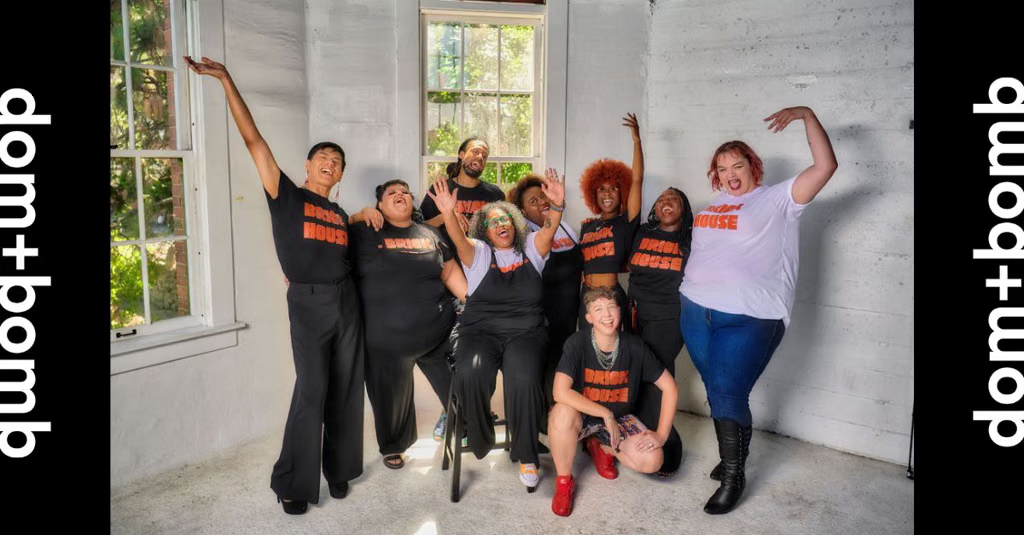
dom+bomb — a local fashion studio that offers custom clothing, tailoring, mending, upcycling, and measurements.
Lace Envy — focused heavily on formalwear and complex garment alterations, potentially useful if your costumes involve gowns or intricate fitted construction.
Alteration By Design — worth asking about custom/reconstruction work rather than assuming they only do ordinary alterations.
A Sewing Shoppe — an established South Hill sewing/alteration shop that may be able to point you toward an appropriate maker even if your project is outside their normal work.
For production work, I'd also search nationally rather than limiting yourself to Spokane. Freelance platforms such as upwork.com have people offering patternmaking, custom garment construction, sample development, and costume work.
And don't overlook theater departments, costume shops, cosplay makers, fashion-school alumni, and local theater companies. Costume makers frequently work freelance, and networking is a major way people find production work.
The most important step: hire them for one sample first
Rather than immediately giving someone your whole collection, give your top 2–3 candidates one costume or one component.
Provide:
Your design sketch/reference images.
Fabric/material information.
Measurements or a dress form.
What the garment needs to withstand.
Your desired finished appearance.
Your deadline.
Your approximate budget.
Whether you need a single piece, a prototype, or repeat production.
Then evaluate the finished sample, communication, accuracy, problem-solving, and how much supervision you had to provide.
That sample will tell you much more than a résumé or online reviews.
One distinction that could save you a lot of money
If you're at the stage of turning original designs into a small collection, you may actually need two different skill sets:
Costume/fashion patternmaker → prototype/sample maker → production seamstress/stitcher
The patternmaker figures out how the design should be constructed and sized. The production sewer then makes repeat pieces efficiently and consistently. A single person can absolutely do both, but you shouldn't assume a talented alterations specialist can automatically develop production patterns.
If you tell me what kind of costumes you're designing, roughly how many pieces you want produced, and whether you already have patterns/tech packs, I can help you figure out exactly what kind of person you should hire and what to ask them in the first interview.
If you’re producing your own costume designs, I’d look for a costume workroom, sample maker, pattern maker, or theatrical tailor rather than a conventional alterations shop. The right person should be able to take your sketch or drape and turn it into a repeatable, durable garment—not just alter something that already exists.
Since you’re in NYC, the Garment District is probably your best starting point. There are several production-oriented shops concentrated around W. 36th–39th Streets.
Who I'd contact first
Eric Winterling — Particularly strong if your work is theatrical, performance-based, highly embellished, or technically complicated. Their studio has master drapers, tailors, dressmakers and stitchers, plus fitting, dyeing, beading and production facilities.
John Kristiansen New York Inc — A good choice if you want a full costume-production partner. They work directly with designers from sketches and fabric selection through construction and fittings.
Arel Studio — Established theatrical/film costume house with tailoring and a large team; useful for more elaborate or professional production work.
Fine Line Studio — More fashion-development oriented. Worth considering if your costumes are closer to fashion collections and you need pattern development, samples and technical help.
Zoila's Sample Room Inc — Interesting option if you need patternmaking → sample → small-batch production, rather than a theatrical production house.
Artsline Studio — Another Garment District option focused on patternmaking and sample development, which could be especially useful if your designs are still being translated from concept into production-ready garments.
Bethany Joy Costumes — Worth investigating for custom costume construction and specialty garments, particularly performing-arts work.
The key is to interview them like a production partner
Before hiring someone, ask:
Can you work from sketches, references, or draping, or do I need finished patterns?
Do you do patternmaking in-house?
Can you make a muslin/toile before the final garment?
Can you handle unusual fabrics, boning, corsetry, armor, stretch materials, beading, appliqué, etc.?
Can you make multiple copies of the same costume?
Do you do grading if I need different sizes?
Can you reinforce the garment for performance use?
Who actually does the sewing—one person or a production team?
What are your sample, revision and production rates?
What is your minimum order and typical turnaround?
That distinction is important: if you're trying to turn your designs into a small collection or recurring costume line, you may want a pattern/sample-development studio rather than an individual seamstress. For example, some NYC studios specifically handle the path from concept → pattern → sample → small production.
How I'd approach them
Put together a small designer package before contacting anyone:
3–5 of your strongest costume sketches
Front/back views if you have them
Photos or mood boards showing the intended look
Fabric/material ideas
Approximate measurements/sizes
What the costume needs to withstand (stage, dance, photoshoot, film, etc.)
Whether you need one prototype, a few costumes, or ongoing production
Your target budget
Your deadline
Then ask for a paid consultation or prototype, rather than immediately committing to a large production run.
One especially useful approach is to hire someone for one test garment first. You'll quickly learn whether they understand your aesthetic, communicate well, interpret your drawings correctly, and have the craftsmanship you need.
If your goal is eventually to produce and sell your costume designs, I'd lean toward Fine Line / Artsline / Zoila's / a similar pattern-and-sample studio. If your goal is one-of-a-kind theatrical costumes for performers, shows, music videos, film, etc., I'd start with Eric Winterling, John Kristiansen, Arel, or Bethany Joy.
You can also use Thumbtack's NYC seamstress listings to find independent seamstresses and compare portfolios/reviews, but for serious costume production I'd prioritize someone with sample-making, patternmaking, and theatrical-production experience rather than ordinary alterations experience.
If you tell me what kind of costumes you design (e.g. avant-garde fashion, cosplay, drag, theater, dance, film, historical, fantasy, etc.) and roughly how many you want produced, I can narrow this down to 5–10 NYC people/shops that are the best fit and tell you exactly who I'd contact first.
Finding the right seamstress, tailor, or costume technician for production requires looking in places where specialized garment constructors hang out—beyond just a standard neighborhood alteration shop.
Industry Directories & Production Hubs : Search professional entertainment directories like ProductionHub to find established costume houses, wardrobe specialists, and freelance technicians who regularly build for theater, film, and commercial projects.
Local Performing Arts Communities : Reach out to local community theaters, opera companies, or university theater and dance departments. Their costume shops often employ or can recommend skilled stitchers, cutters, and drapers who freelance on the side.
Niche Online Marketplaces & Forums : Explore professional freelancer networks like Upwork Sewing Professionals for remote pattern-makers and constructors, or browse specialized costuming communities on platforms like Reddit's r/costuming to source independent makers.
Local Fabric and Specialty Stores : Independent, high-end, or quilting/costuming fabric shops often have bulletin boards or relationships with local hidden-gem seamstresses who take private commission work.
Cosplay and Maker Conventions : Local comic cons or historical European martial arts (HEMA) and reenactment groups are goldmines for finding elite independent prop and costume fabricators.
Finding Local Recommendations
Checking in with community boards or niche costuming groups often yields realistic advice on who is reliable for complex builds:
Tailors can work with costumes that don't require armature, foam, or 3D printing.
Local college theater departments, community theaters, and tailors. These places may have a creative seamstress on call.
To help narrow down the best search strategy, tell me:
Are you looking for one-off custom prototypes or small-batch production?
What materials and techniques does your design require (e.g., standard textiles, stretch/spandex, thermoplastics, leather)?
Finding the right professional to bring costume designs to life requires looking beyond everyday dry-cleaner alterations . Costume production requires specialized skills in pattern-drafting, structural support (like boning or padding), unique fabric handling, and prototyping.
The most effective avenues to source and vet skilled costume makers, tailors, or small-batch production partners include:
Check industry databases like the CFDA Production Directory if you are scaling up to small-batch production runs.
Search entertainment-focused directories like ProductionHub Tailors & Seamstresses for professionals experienced specifically in film, commercial, and theatrical wardrobes.
Local Theater, Opera, and Dance Companies
Reach out to the costume shop manager or resident designer at local community theaters, regional playhouses, or university drama departments.
Stitchers, cutters, and first hands who work in theatrical costume shops often take freelance independent work or can recommend talented local makers who excel at creative construction.
Costume Guilds and Union Resources
Explore professional networks such as the Costume Designers Guild or look at local craftsperson directories like the Motion Picture Costumers Local 705 Vendors for high-level specialized construction houses, particularly if you need specialty builds, armor, or period-accurate tailoring.
Niche Communities and Local Sourcing
Visit independent local fabric stores (not large chain craft stores) and ask the staff or check community bulletin boards. Independent fabric shop owners usually know every talented independent seamstress and tailor in the area.
Look through local maker spaces, cosplay communities, or independent fashion incubator programs that offer localized cut-and-sew networking.
If you'd like to narrow this down, let me know:
What type of costumes are you producing (e.g., historical period, sci-fi/armor, stylized stage wear)?
Are you looking for a single prototype/one-off piece or small-batch production quantities?
Cutting Line Production Room - 221 E Colonial Dr Ste 145, Orlando, FL 32801, United States
LDC DESIGNS - 4940 S Orange Ave, Orlando, FL 32806, United States
Jennifer Sews - 17538 Satsuma Cir, Winter Garden, FL 34787, United States
Sew project by project LLC - 1193 E Altamonte Dr, Altamonte Springs, FL 32701, United States
Sandriena Kim Designs - 1101 Symonds Ave, Ste 500, Winter Park, FL 32789
Collins Creative - 3305 Commerce Blvd, Kissimmee, FL 34741, United States
Dawn's Alteration Service - 4915 S Orange Ave, Orlando, FL 32806, United States
THIN NEEDLE ALTERATIONS AND TAILORING - 1050 Constance Rd apt 107, Orlando, FL 32826, United States
Hana Alterations - 6020 Edgewater Dr Ste 100, Orlando, FL 32810, United States
111 Sage Tailoring and Alterations - 520 E Church St, Orlando, FL 32801, United States
Lynn Fashion & Bridal - 1244 E Colonial Dr, Orlando, FL 32803, United States
Hue's Tailor & Alterations - 5555 W Colonial Dr #401, Orlando, FL 32808, United States
YanMar Alterations LLC - 942 Murdock Blvd, Orlando, FL 32825, United States
Abuela’s Alterations - 1150 Osceola Pkwy, Kissimmee, FL 34741, United States
Great Couture Fashion - 5401 S Kirkman Rd 5th FLOOR Ste 515, Orlando, FL 32819, United States
Hardrive Productions Inc - 4605 L B McLeod Rd suit 300, Orlando, FL 32811, United States
If you’re developing your own costume designs for production, I’d look for more than a traditional alterations tailor. You want someone who understands patternmaking, garment construction, fitting, unusual materials, prototypes, and eventually repeat production.
Since you’re in the Orlando area, you actually have a strong pool of costume-production talent because of the theme parks, theatre, film, and entertainment industries.
What to look for
The ideal person should be able to do several of these:
Patternmaking from your sketches, reference garments, or measurements
Sample/prototype construction before you commit to expensive fabric
Work with stretch fabrics, corsetry, foam, leather, vinyl, specialty trims, etc., depending on your designs
Fittings and alterations on performers/models
Translate a fashion illustration into something structurally wearable
Make multiple copies of the same design consistently
Understand production deadlines and communicate about materials, labor, and revisions
Ideally use industrial sewing machines if you're moving toward small-batch production
I'd specifically search for terms like "costume technician," "costume fabricator," "pattern maker," "sample maker," "garment production," "costume shop," and "wardrobe technician" rather than searching only for "seamstress."
A few Orlando-area leads worth investigating
Cutting Line Production Room is probably one of the strongest matches for what you're describing. They're specifically set up for garment and costume construction, patterning, prototypes, tailoring, soft goods, and small-volume production, and they work with theatre, film/TV, theme parks, and entrepreneurs.
LDC DESIGNS is another particularly relevant option if your designs are intended for professional entertainment. Their operation focuses on theatrical costuming, custom garment builds, wardrobe, and production support.
Jennifer Sews is worth contacting if you're looking for a more individual seamstress relationship. She specifically advertises custom costuming, dressmaking, and sewing support for theatrical productions and fashion events.
Sew project by project LLC is particularly interesting if you're moving beyond one-off costumes toward an actual fashion/product line. Their listed capabilities include patternmaking, samples, duplicates, fit samples, fabric/trim sourcing, cutting, sewing, finishing, and quality control.
Sandriena Kim Designs may be worth considering for highly detailed performance garments; they advertise custom dance, theatrical, and competition costumes where movement and stage presence are important.
There's also Collins Creative in Kissimmee, which is oriented toward larger-scale entertainment and costume production rather than ordinary alterations.
The most important thing: test them with one design
I wouldn't immediately hand someone your entire collection.
Give your best candidate one relatively representative costume and pay them to create a prototype/sample.
Bring:
Your sketch or fashion illustration
Front/back/side views if you have them
Reference photos
Fabric/material ideas
Measurements or a model for fitting
Intended use — stage, dance, film, photoshoot, convention, etc.
Expected movement requirements
Your desired finished quality
Whether you eventually want 1, 5, 20, or 100+ copies
Then evaluate the process, not just the finished garment.
A great production partner should be able to look at your design and say things like, "That will work, but I'd construct this section differently because the performer needs to move," or "Let's prototype this in inexpensive fabric before cutting the final material."
That's exactly the kind of expertise you want.
One thing I'd avoid
Don't choose primarily on the lowest sewing price.
If you're developing a recognizable costume line, the expensive part isn't necessarily the sewing—it's getting the pattern, fit, construction method, and repeatability right. A good prototype maker can save you enormous amounts of money when you start producing multiple pieces.
And before giving someone your full collection, I'd also discuss confidentiality, ownership of patterns, who owns the finished samples, whether they can photograph/post the work, and whether they can reproduce your designs for someone else.
If you'd like, I can also help you build a shortlist of 5–10 Orlando/Central Florida costume professionals specifically suited to turning an original designer's sketches into production-ready garments, rather than ordinary alteration shops.
Finding the right collaborator to bring costume designs to life depends heavily on whether you need a single prototype (cosplay/theater) or small-batch production.
Where to Look for Talent
Local Theater & Performing Arts: Reach out to local community theaters, opera companies, or university costume departments. They often employ or know skilled stitchers, first-hands, and drapers who take freelance side work.
Industry Directories: Use specialized entertainment production databases like ProductionHUB to find professional wardrobe, costume construction, and tailoring talent.
Freelance Platforms: Explore global networks like Upwork Sewing Professionals to hire pattern makers, sample makers, or technical designers who specialize in apparel development.
Independent Makers & Etsy: Search for custom creators and small private-label sample makers on platforms like Etsy Custom Sewing or specialized costuming communities and forums.[2]
Key Steps for Vetting and Onboarding
Define Your Scope: Know whether you need raw pattern drafting, technical specifications, a one-off prototype, or full production runs. Traditional tailors excel at structured fit, while theatrical stitchers handle movement and quick-changes better.
Review Portfolios Carefully: Ask for photos of internal seams, linings, and complex closures. Costume construction requires durability and specialty techniques that regular fashion alterations might not cover.
Start with a Test Piece: Commission a single prototype or mock-up before committing to a larger production run to test communication, turnaround time, and construction quality.
To help narrow down your search, tell me:
Are you looking for local in-person collaboration or remote production?
Is this for a single custom piece , a small batch , or full production?
Geneva's Alterations - 213 S Sharpe Ave, Cleveland, MS 38732, United States
Chezzrae LLC - 133 Front Ave, Indianola, MS 38751, United States
Haley Jane Costumes and Lessons - Memphis, TN 37501
Custom Garments & Tailoring Lina Marcela - 4964 Forest Hill Irene Rd, Memphis, TN 38125, United States
NaeDazzle Designs - 9111 Millbranch Rd, Southaven, MS 38671, United States
S & Cee's Fashion Accessories LLC - 1206 W Main St, Tupelo, MS 38801, United States
BlueBird Alterations and Design Oxford - 317 Heritage Dr Ste 5A, Oxford, MS 38655, United States
Pearl Alterations - 1295 N Lamar Blvd d, Oxford, MS 38655, United States
COSTUME PARTY - 100 Russell St Ste 9, Starkville, MS 39759, United States
The Perfect Fit By Mary Ross - Hattiesburg, MS 39402
Lauren B Designs - 1901 N Frontage Rd #11, Vicksburg, MS 39180, United States
Gail McInnis Productions - 115 Lake Estates Dr S, Hattiesburg, MS 39402, United States
D'Lux Alterations - 1591 Bluefield Rd, Starkville, MS 39759, United States
Jones Specialty Softgoods, LLC - 3943 Oakcliff Industrial Ct, Atlanta, GA 30340, United States
Sew a Little Love Alterations Custom Sewing and Handmade Gifts LLC - 5675 MS-429, Carthage, MS 39051, United States
Absolutely. If you’re producing your own costume designs, I’d look for someone who is more than an alterations tailor—you want a sample maker, costume technician, pattern maker, or costume seamstress who can take a sketch and turn it into a finished garment.
The distinction matters: costume cutters/tailors typically handle patternmaking, construction, fitting, and alterations in collaboration with the designer.
What to look for
I’d prioritize someone who can do several of these:
Pattern drafting from your sketches or an existing garment
Muslin/mockup construction before cutting your final fabric
Complex garment construction
Corsetry, boning, draping, stretch fabrics, leather, specialty fabrics, etc., depending on your designs
Hand finishing, embroidery, beading, appliqué, or embellishment
Fittings and alterations
Producing multiple versions of the same design
Working from tech packs, technical drawings, measurements, and samples
Understanding movement—especially if the costumes are for dance, theater, film, music, or performance
For production work, I'd actually favor a person who can say, “Give me the sketch and I'll help you figure out how to build it,” rather than someone whose experience is primarily hemming and alterations.
Where I'd search
A few particularly useful places:
findadressmaker.com — a directory specifically covering dressmakers, sample makers, contractors, tailors, seamstresses, costumers, and pattern makers.
creativepool.com — useful for finding freelance costume makers and comparing portfolios. Their own guidance is to shortlist based on portfolio relevance rather than simply the job title.
upwork.com — useful if you're willing to work remotely or want someone for pattern development, technical design, or production preparation.
Local theater companies, university theater departments, opera companies, dance companies, and film-production communities. These can be particularly good sources because they already know people who work behind the scenes in costume construction.
Since you're in the Mississippi Delta
I also found a few potentially interesting nearby leads—not all of these are necessarily right for production, so I'd interview them rather than assuming they're a fit:
Geneva's Alterations in Cleveland — local tailoring/alterations.
Chezzrae LLC in Indianola — particularly interesting because it's associated with custom formalwear rather than only basic alterations.
Haley Jane Costumes and Lessons in Memphis — specifically focused on sewing/costume work and advertises costumes for dance, music, film, and theater.
Custom Garments & Tailoring Lina Marcela in Memphis — custom garments as well as tailoring.
NaeDazzle Designs in Southaven — custom/bespoke garment work and statement pieces.
For your particular goal, Haley Jane would be one of the first I'd investigate because the costume/performance orientation is more relevant than ordinary alterations.
The most important thing: give them a small test project
Don't immediately hand someone your entire collection.
Choose one costume and say:
Here's my sketch. Here's the fabric. Here's what the garment needs to do. I'd like a prototype/mockup first, then the finished piece.
Pay them for that work.
You'll quickly discover whether they:
understand your vision;
communicate well;
know how to solve construction problems;
make useful suggestions without taking over your design;
hit deadlines;
keep costs under control;
produce the quality you're looking for.
A good costume portfolio should ideally show not just beautiful finished garments but patterns, mockups, construction/process documentation, fabric choices, and finished pieces.
Ask these questions before hiring
I'd send prospective makers something like:
Do you construct garments from original sketches/designs?
Do you draft patterns, or would I need to provide patterns?
Can you make a prototype/muslin before the final garment?
What types of fabrics and construction techniques do you specialize in?
Have you worked on costumes for performance, film, theater, dance, or music?
Can you reproduce a design multiple times?
What is your typical turnaround time?
Do you charge hourly or per garment/project?
What do you need from me to quote the job?
Can I see examples of garments you've constructed from someone else's design?
That last question is particularly valuable. You aren't necessarily looking for another designer—you need someone who can translate your designs into physical garments.
And think beyond one seamstress
If you eventually want to turn your costume designs into a real production line, your ideal setup may become:
You → pattern maker/technical designer → sample maker → seamstress/tailor → production sewing → finishing/embellishment
You don't necessarily need all those people right away. One exceptionally skilled costume maker may cover several roles initially.
If you tell me what kind of costumes you're designing (e.g. stage, dance, pageant, film, fantasy, couture, historical, children's, music/performance, etc.) and roughly how many pieces you want produced, I can help you figure out exactly what kind of professional you need—and I can also search for specific costume makers within driving distance of you.











Material Concepts
Velvet Atelier
Council of Fashion Designers of America
Motion Picture Costumers Local 705
Costume Designers Guild
Tailored to You